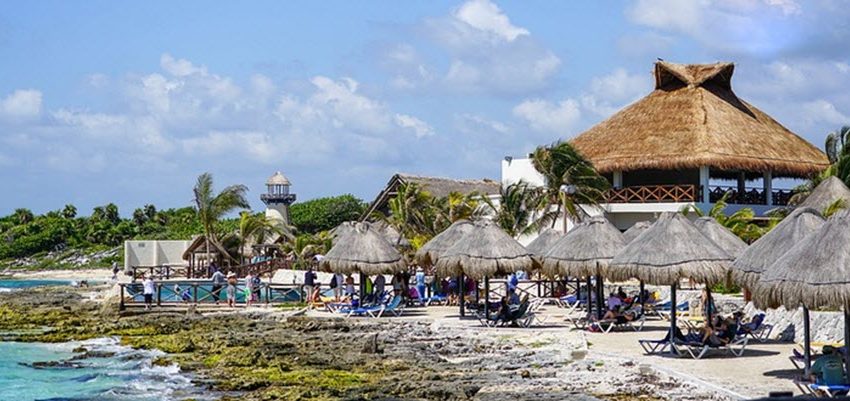
Mexico is a country bordered by the United States to the north and to Guatemala and Belize to the south-east. It has long coasts along both the Pacific Ocean and the Atlantic, including the Caribbean Sea and the Gulf of Mexico.
Officially named the United Mexican States (Spanish: Estados Unidos Mexicanos), this country is a federation consisting of 31 states + Mexico City.
Out of the 141 UNESCO World Heritage Sites in Latin America and the Caribbean, 35 are found in Mexico, which is the highest number for any country in the region. Out of these 35 sites, 27 are cultural sites, six are natural sites, and two are mixed.
Mexico is also famous for its natural biodiversity and is home to a wide range of different habitats. The climate varies considerably throughout the country. Very generally speaking, the north is mountainous and cooler, with notable arid areas at lower elevations. From around Tampico, the climate becomes more warm and humid.
In 2018, Mexico was the 6th most visited country in the world, with 39 million international arrivals.
We will help you find a free Forex demo account
Short facts about Mexico
Currency: The Mexican peso (MNX)
Driving side: The right-hand side
Calling code: +52
Internet TLD: .mx
ISO 3166 code: MX
Capital
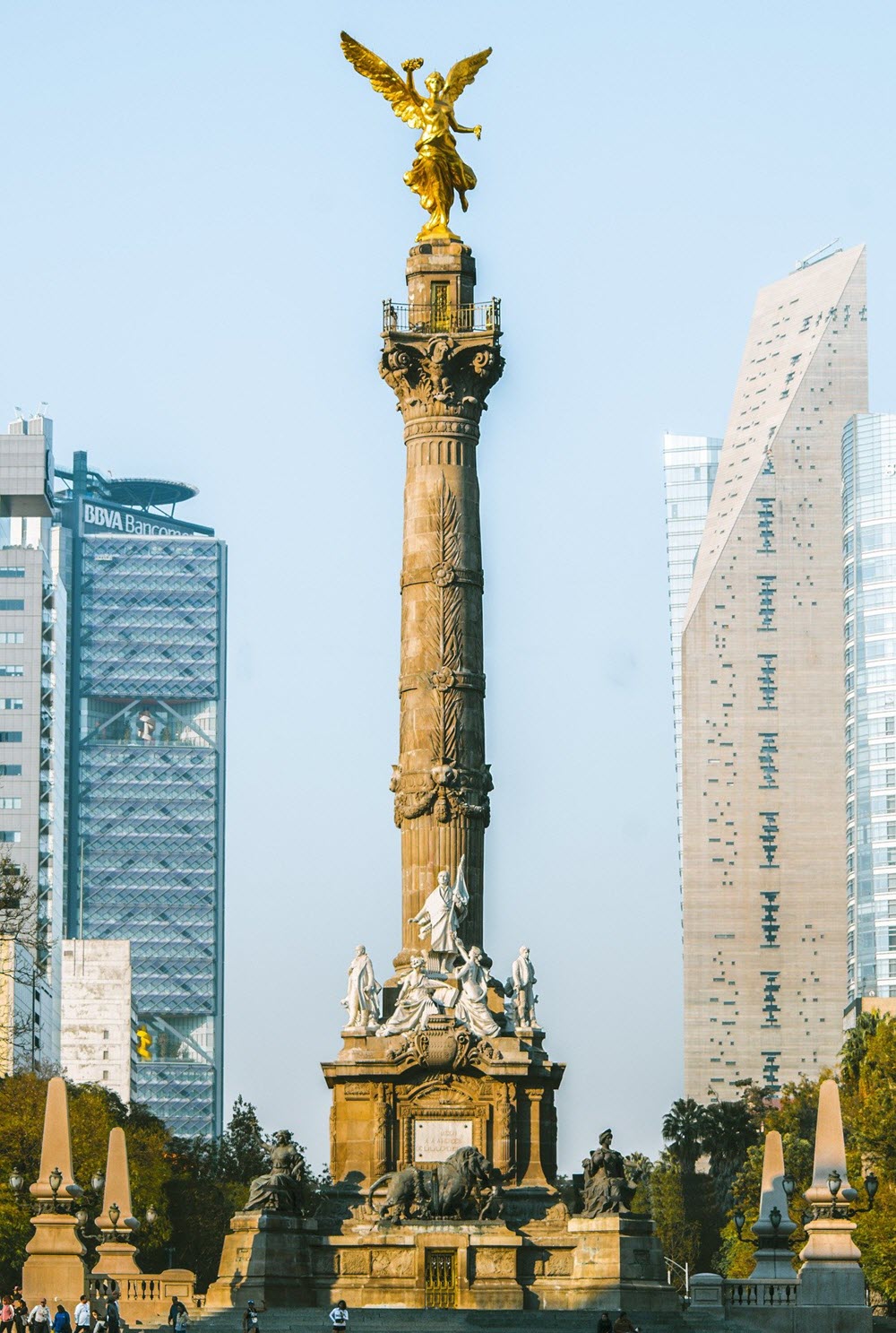
Mexico City is the capital and most populous city of Mexico.
The de facto official language in Mexico is Spanish.
Spanish + 68 Native American languages are recognized regional languages.
Religion
Data from 2010 show that over 80% of the population identified as Catholics.
Minority religions: 6.6% Protestantism, 1.4% Jehovah’s Witnesses, 1.9% any other religion
4,7% of respondents identified as irreligious
Area
The total area of Mexico is 1,972,550 km2 (761,610 sq mi).
Population
For 2020, the estimated population is almost 129 million people.
Time zone
Mexico is a large country with several time zones, from UTC -8 to UTC -5.
Mexican time zone
Winter
Summer (DST)
Zona Sureste
UTC−05:00
UTC−05:00
Zona Centro
UTC−06:00
UTC−05:00
Zona Pacífico
UTC−07:00
UTC−06:00
Zona Pacífico
UTC−07:00
UTC−07:00
Zona Noroeste
UTC−08:00
UTC−07:00
Mexico has four main time zones. Most of the country observes Daylight Saving Time (DST), but Zona Sureste and parts of Zona Pacifico do not.
For economic reasons, some metropolitan areas close to the United States border follow the U.S. Daylight Saving Time schedule instead of the Mexican one.
Holidays
🇲🇽
Mexican Holidays & National Observances
Annual civic commemorations, religious traditions, and official statutory bank holidays (Días Feriados)
National Day
16 September
Día de la Independencia
Patroness of Mexico
12 December
Virgen de Guadalupe
Holiday Types
Statutory vs. Civic
Article 74 Labor Law basis
Long Weekends
“Puentes”
Observed Mondays for civic dates
Date
Holiday Name
Legal Status
Significance & Cultural Observance
1 January
New Year’s Day Año Nuevo
Bank Holiday
Statutory federal non-working day across Mexico to begin the calendar year.
6 January
Día de los Reyes Epiphany / Three Kings’ Day
Observance
Traditional day for children to receive gifts from the Magi; families gather to slice the ceremonial Rosca de Reyes sweet bread containing figurines of the infant Jesus.
2 February
Día de la Candelaria Candlemas / Virgin of Candelaria
Observance
Celebrated nationwide with religious processions and tamale feasts hosted by whoever found the baby Jesus figurine in the Three Kings’ Rosca.
5 February
Constitution Day Día de la Constitución
Bank Holiday
Marks the enactment of the Mexican Constitution of 1917. Officially observed on the first Monday of February to create a long weekend.
24 February
Flag Day Día de la Bandera
Civic Date
Commemorates the 1821 Plan of Iguala establishing the colors of the national banner; marked by civic ceremonies and military flag-raising events.
1st Sun. in March
Family Day Día de la Familia
Observance
Established to promote social unity and familial bonds through municipal festivals and public recreational activities.
21 March
Benito Juárez’s Birthday Natalicio de Benito Juárez (b. 1806)
Bank Holiday
Honors Mexico’s revered 19th-century liberal president and national hero. Observed on the third Monday of March.
Variable 22 Mar – 25 Apr
Holy Week & Easter Semana Santa & Pascua
Bank / School Recess
Follows Catholic computus (first Sunday after the first full moon following the vernal equinox). While not mandatory federal holidays, Maundy Thursday and Good Friday are standard banking and school recesses nationwide.
1 May
Labor Day Día del Trabajo
Bank Holiday
Statutory federal holiday honoring workers’ rights and historical union movements; marked by labor union marches nationwide.
5 May
Battle of Puebla (Cinco de Mayo) Batalla de Puebla
Civic / State Holiday
Commemorates the Mexican Army’s 1862 victory over French forces under General Ignacio Zaragoza. Highly celebrated in Puebla (school holiday), but a normal working day for commercial businesses in the rest of Mexico.
10 May
Mother’s Day Día de las Madres
Observance
Always celebrated on this exact fixed calendar date; one of Mexico’s most cherished cultural traditions featuring family serenades with Las Mañanitas.
1 September
Presidential Address Informe de Gobierno
Civic Date
The President of Mexico delivers the annual state-of-the-union address to the Congress of the Union (ordinary working day).
15 September
Cry of Dolores Grito de Dolores
Civic Eve
Evening reenactment of Miguel Hidalgo’s 1810 call to arms, performed at 11:00 PM from the balcony of the National Palace in Mexico City and municipal plazas across the country.
16 September
Independence Day Día de la Independencia
Bank Holiday
Statutory federal holiday marking the beginning of the Mexican War of Independence in 1810; celebrated with major military parades in the Zócalo.
12 October
Columbus Day / Día de la Raza Descubrimiento de América / Pluricultural Day
Observance
Commemorates the meeting of Indigenous and European cultures; celebrated as a civic reflection day rather than a mandatory work closure.
2 November
Day of the Dead Día de Muertos (All Souls’ Day)
Bank / School Recess
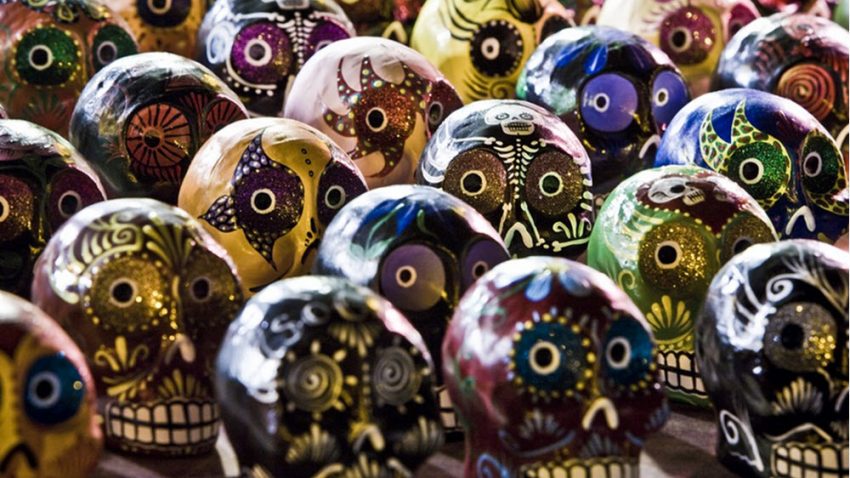
UNESCO Intangible Cultural Heritage: families build home altars (ofrendas) with cempasúchil flowers, sugar skulls, and bread of the dead (pan de muerto) to honor departed loved ones. Banks and schools are routinely closed.
20 November
Revolution Day Día de la Revolución (1910)
Bank Holiday
Commemorates the 1910 armed movement against Porfirio Díaz. Observed on the third Monday of November with civic and athletic parades.
12 December
Virgin of Guadalupe Day Día de la Virgen de Guadalupe
Bank Recess (Día del Banquero)
Major national pilgrimage drawing millions to the Basilica of Guadalupe in Mexico City. Also celebrated as Día del Empleado Bancario, so financial institutions are closed.
24 December
Christmas Eve Nochebuena
Partial Day
Culmination of the 9-day Las Posadas cycle; central family gathering night with traditional midnight dinner (bacalao, romeritos, ponche).
25 December
Christmas Day Navidad
Bank Holiday
Statutory federal holiday; spent at home with family enjoying the traditional recalentado (reheated feast).
31 December
New Year’s Eve Fin de Año / Víspera de Año Nuevo
Observance
Commercial business day with early closures; evening festivities include eating 12 grapes at midnight for prosperity and good fortune.
Mexican Labor Law Rule (LFT Artículo 74): Statutory federal bank holidays (días de descanso obligatorio) mandate paid time off. If employees are required to work on an official holiday, employers are legally obligated under the Federal Labor Law to pay standard daily salary plus double pay (triple compensation total). Three major civic holidays (Constitution Day, Benito Juárez’s Birthday, and Revolution Day) are systematically shifted to the preceding Monday to establish long holiday weekends (fines de semana largos / puentes).
Background
This region has been populated since at least 8,000 BCE and is one of the world´s six cradles of civilization. Several complex Mesoamerican civilizations have developed here, including the Maya and the Aztec civilizations.
The region was colonized by Spain in the 16th century and remained a Spanish colony until achieving independence in the 19th century.
During the colonial epoch, the local Native American peoples were harshly exploited by the colonial powers, especially in the mining industry, as the extraction of precious metals became an important source of wealth for Spain. Diseases from the Old World also served to shrink the local populations, as many died in illnesses such as smallpox and measels.
Mexico ceased to be a Spanish colony in 1821, as a result of the Mexican War of Independence.
Mexico lost considerably amounts of land in the north of the country through the Texas Revolution in 1835-1836 and the Mexican-American War 1846-1848.