
The Introduction of Aqueducts in Colonial Mexico
The establishment of aqueducts in colonial Mexico represents a pivotal moment in the evolution of water management systems during the era of New Spain. These magnificent structures not only stand as architectural marvels but also played a crucial role in molding urban landscapes and ensuring a consistent water supply for burgeoning populations during a period of rapid expansion.
Historical Background
The arrival of the Spanish conquistadors in the early 16th century brought about a critical need to enhance the existing water infrastructure in Mexico. The indigenous communities had their own effective water management systems; however, these were often inadequate to meet the pressures of increasing populations and expanding colonial settlements. The Spanish introduced new engineering techniques and knowledge, among which the use of aqueducts stood out for its effectiveness in transporting water across extended distances.
The Design and Construction of Aqueducts
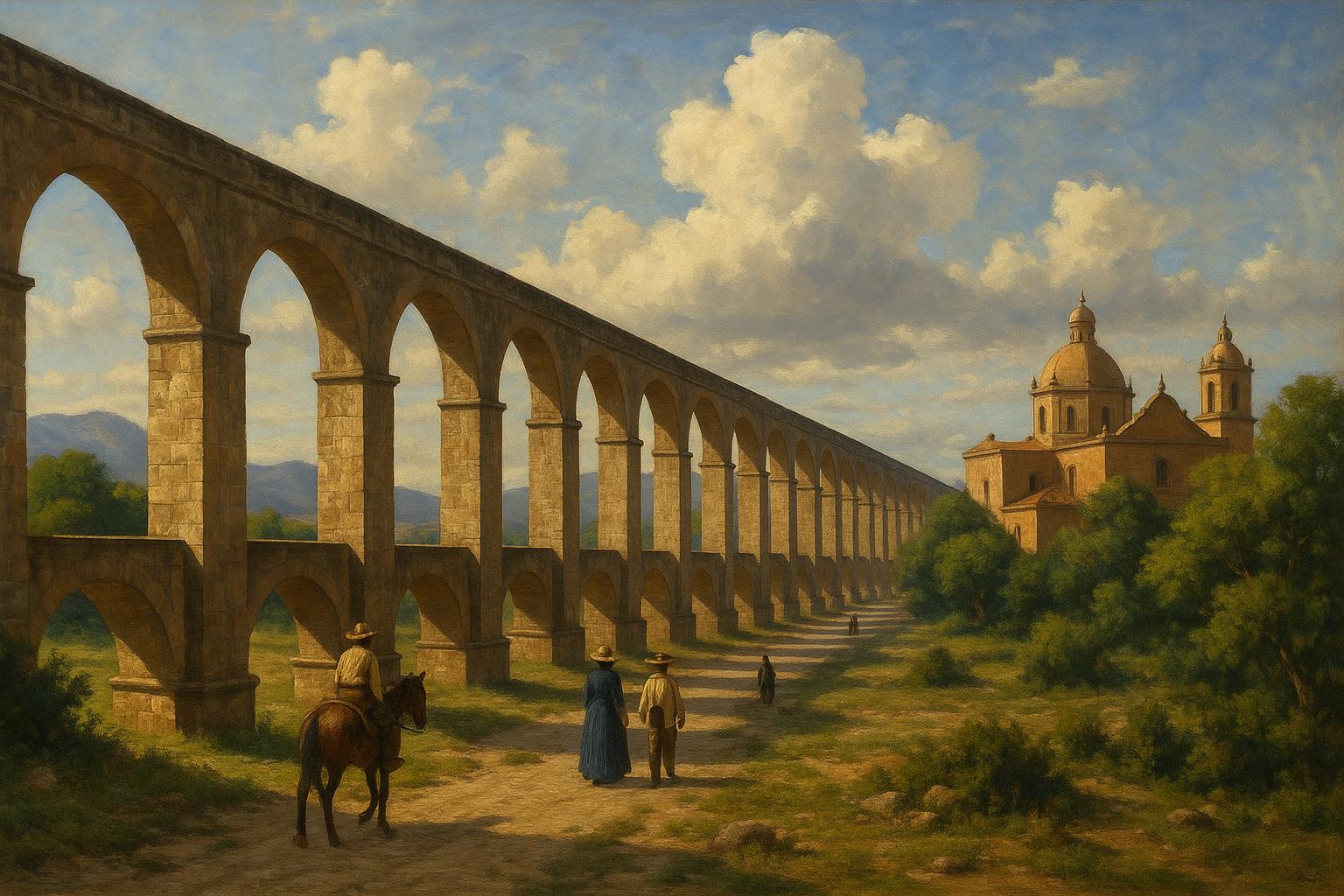
Crafting aqueducts in colonial Mexico involved an intricate amalgamation of sophisticated engineering skills, where Spanish methodologies blended harmoniously with indigenous practices. These aqueducts were primarily constructed from stone and masonry, reflecting a high degree of workmanship. Spanning multiple kilometers, they typically comprised a series of elegant arches that supported extensive canals, ensuring the gravitational movement of water from remote sources to burgeoning urban centers.
Among the most renowned of these structures is the Aqueduct of Chapultepec, completed in the 18th century. This remarkable structure extended over three kilometers and played an indispensable role in channeling water to Mexico City, which was rapidly growing at the time. The significance of such aqueducts lies not only in their functional capacity but also in their artistic and architectural mastery, which continues to be admired to this day.
Role in Urban Development
Aqueducts were instrumental in the urban development of colonial Mexico. By enabling a dependable supply of fresh water, these structures supported various essential activities, such as domestic consumption, agriculture, and sanitation. The assurance of a constant water supply served as a magnet for settlers, facilitating the expansion of urban centers. It was not merely the availability of water that mattered but also the opportunity it provided for cities to evolve and thrive economically and socially.
As cities grew, the aqueducts also contributed to the diversification of urban infrastructure. They were integrated into complex systems that supported public fountains, baths, and gardens, further enhancing the quality of life for the inhabitants of colonial Mexican cities. The influence of aqueducts thus extended beyond basic survival, playing a pivotal role in shaping a lively and culturally rich urban environment.
Impact on Society and Culture
Beyond their utilitarian purpose, aqueducts left a significant imprint on the society and culture of colonial Mexico. They epitomized the technological capabilities and control of the colonial authorities, becoming symbols of power and progress. As dominant features within the urban landscape, aqueducts frequently inspired contemporary art and literature, reflecting the society’s respect and admiration for these feats of engineering.
However, the construction and maintenance of aqueducts were not purely a matter of engineering. They often became focal points of social and political tension, as their presence directly affected the accessibility of water resources. Such disputes underscore the profound importance of equitable water management systems in a society dependent on agriculture and settlements. These conflicts occasionally erupted into broader societal issues, revealing the complexities of colonial governance and community relations.
For those interested in learning more about the engineering marvels of colonial Mexican aqueducts, there is an abundance of scholarly articles and books that provide detailed analyses and case studies. Such literature explores the nuances of the engineering techniques employed, the cultural context of the era, and the lasting impacts of these significant structures.
In conclusion, the aqueducts of colonial Mexico served far beyond their primary role as conduits for water. They were emblematic of the confluence of European and indigenous engineering, central to the development of the social and urban fabric of New Spain. By bridging past and present, these aqueducts remain testament to a period characterized by dramatic transformation and intercultural exchange.