
Octavio Paz
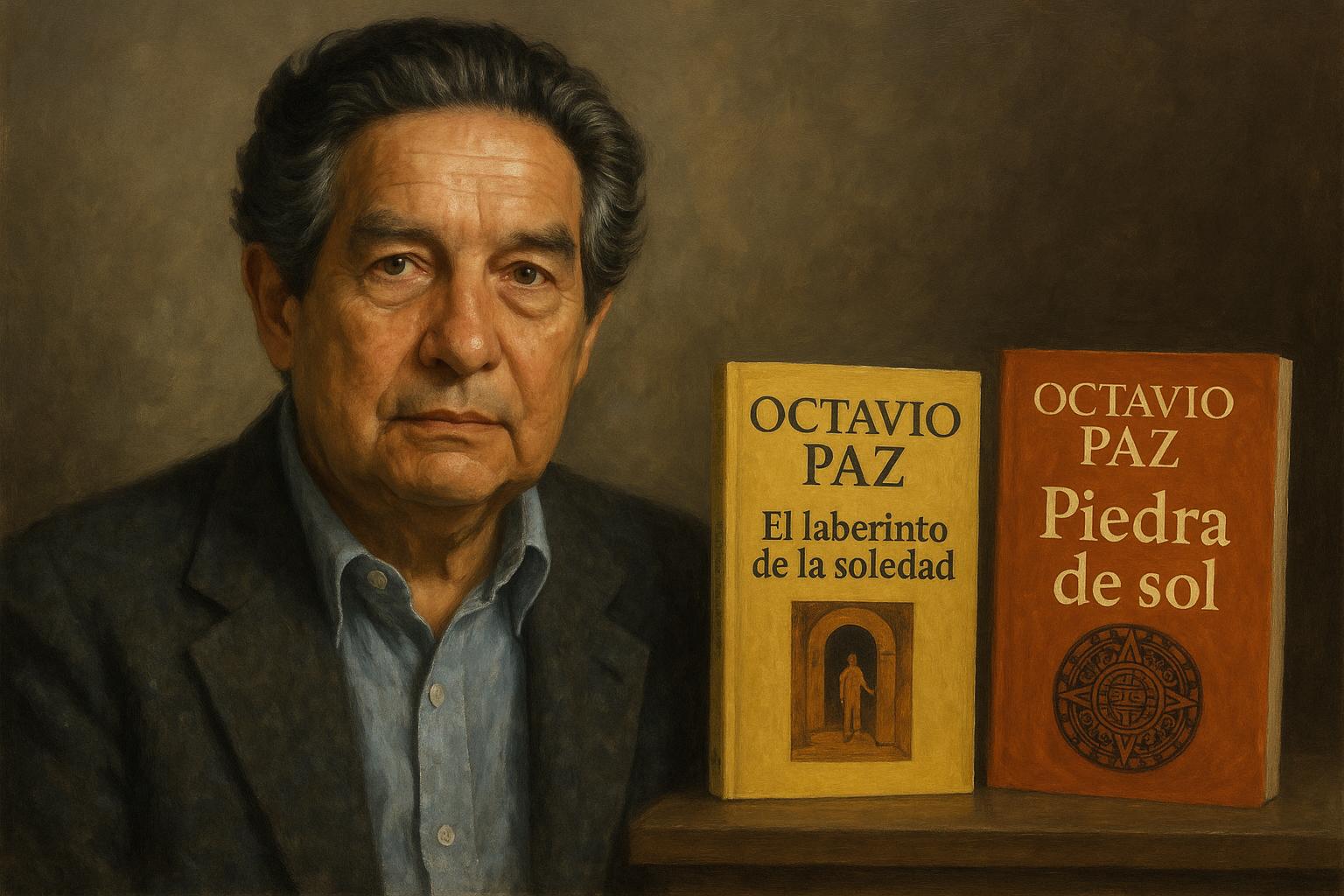
Octavio Paz was a prominent Mexican poet, essayist, and diplomat, renowned for his substantial contributions to literature and cultural analysis. Born on March 31, 1914, in Mexico City, Paz’s literary career spanned several decades, during which he garnered international acclaim.
Early Life and Influences
Growing up in a family with a strong political and intellectual background, Octavio Paz was exposed to a rich cultural environment that deeply influenced his future works. His grandfather was a prominent liberal intellectual and his father was an active journalist and revolutionary. This environment provided young Paz with a wealth of literature and ideas, prompting his early interest in writing. He began publishing poetry at a young age, with his first collection titled Luna Silvestre released in 1933. His early work was influenced by both his personal experiences and the rich history and traditions of Mexico, as well as by modernist styles and European avant-garde movements.
Major Works and Themes
Octavio Paz authored numerous works that explored themes of identity, solitude, and the intersection of history and modernity. His literary output was diverse, ranging from poetry and essays to scholarly works and translations. Paz was known for delving into the complexities of the human condition and cultural identity. His most celebrated book, The Labyrinth of Solitude, is a profound exploration of Mexican identity and culture. This work is widely regarded as a seminal text for understanding the Mexican psyche and cultural landscape. It examines the nature of solitude and the quest for identity within the context of Mexican society, exploring the contradictions and complexities that define the Mexican experience.
Additionally, his poetry often reflected his philosophical inquiries and drew upon various cultural and stylistic influences. Works like Sunstone and Blanco illustrate his skillful craftsmanship, blending surrealism with existentialism, while addressing universal themes such as love, time, and existence.
Recognition and Legacy
Paz’s outstanding contributions to literature earned him several accolades, one of the most prestigious being the Nobel Prize in Literature in 1990. His receipt of this award acknowledged his profound influence on both Mexican literature and international cultural discourse. He was celebrated not only for his literary achievements but also for his role as a cultural ambassador, spreading Mexican cultural concepts and engaging with literary communities worldwide.
Beyond his published works, Paz’s impact extended to his editorial efforts and his engagement with fellow writers and intellectuals. He founded and contributed to numerous literary magazines, further enhancing his influence on modern thought and culture. His works continue to be studied and revered for their depth and insight into both Mexican and global themes. For more on his life and works, you can explore scholarly articles and reviews that discuss his impact on literature and cultural studies, often available through literary databases and academic journals.
Carlos Fuentes
Carlos Fuentes, born on November 11, 1928, in Panama City, was one of Mexico’s most distinguished novelists and a key figure in the Latin American Boom, a literary movement that brought international attention to Latin American authors in the mid-20th century.
Early Life and Career
Coming from a diplomatic family, Fuentes spent his early years in various countries, including the United States, Chile, and Argentina, as his father was posted to different diplomatic positions. This experience of moving frequently and experiencing diverse cultures deeply influenced his perspective and literary voice, allowing him to articulate a broad vision of Mexican and Latin American identities.
His education and formative years in different countries endowed him with a cosmopolitan outlook. He pursued law at Mexico’s National Autonomous University and later studied at the Institute of Advanced International Studies in Geneva. Fuentes published his first novel, Where the Air Is Clear, in 1958, which marked the beginning of a prolific writing career. This novel was a breakthrough that established his reputation as an important new voice in Mexican literature.
Notable Works and Contributions
Fuentes was known for his experimental narrative techniques and his exploration of Mexican and Latin American history. His novels frequently employed a non-linear narrative and complex structures to capture the intricacies of his themes. The Death of Artemio Cruz is among his most acclaimed works, offering a critical view of Mexican society and politics through the prism of a dying man’s memories. It’s a powerful exploration of power, identity, and corruption within the context of Mexico’s revolutionary history.
Another significant work by Fuentes is Terra Nostra, an ambitious novel that spans multiple centuries and continents, reflecting the historical and cultural complexities of Hispanic civilization. Through his novels and essays, Fuentes examined themes such as power, identity, and historical memory, often intertwining the threads of myth, history, and fiction to create new narrative forms.
Awards and Influence
Throughout his life, Carlos Fuentes received numerous awards for his contributions to literature. Among the many national and international accolades, he was honored with the Miguel de Cervantes Prize in 1987, which is considered the most prestigious award in Spanish literature. This recognition cemented his status as a literary figure of global significance. Fuentes played a vital role in shaping modern Mexican literature and remains an influential figure in literary circles.
His books, essays, and public intellectual work continue to be a source of study for those interested in Latin American culture and history. Beyond his fiction, Fuentes was an articulate and passionate advocate for cultural and political dialogue, engaging in public discourse and contributing to newspapers and magazines worldwide on issues concerning politics and culture.
Both Octavio Paz and Carlos Fuentes have left indelible marks on the literary world. Through their writings, they have provided profound insights into Mexican culture and identity, captivating readers around the globe with their intellectual depth and literary innovation. To further explore their works and influence, literary festivals and academic conferences often feature discussions and analysis of their contributions to global literature, reflecting their ongoing relevance and the continued appreciation of their literary legacies.