
Understanding Mexican Proverbs and Sayings
Mexican culture is abundant with proverbs and sayings, known as dichos in Spanish, which are integral to reflecting the nation’s rich history, deeply rooted values, and dynamic social norms. These expressions are more than mere phrases; they are cultural tools that encapsulate wisdom, humor, and advice. As such, they serve as an essential medium for intergenerational communication, being passed down through families and communities over many years.
Proverbs and Their Significance
Proverbs provide philosophical insights in a concise and effective manner. Mexicans often employ these linguistic tools in daily dialogues to emphasize opinions, provide guidance, or impart wisdom. The artful blend of brevity and metaphor ensures that proverbs remain powerful means of communication. Their relevance across different contexts underscores their pervasive presence in everyday Mexican life.
Examples of Popular Mexican Proverbs
One widely recognized Mexican proverb is “A caballo regalado no le mires el diente.” which, in English, translates to “Don’t look a gift horse in the mouth.” This saying serves as a reminder to accept gifts graciously without scrutinizing them for imperfections. It suggests that the focus should be on the generosity of the gift-giver rather than the inherent value or quality of the gift itself.
Another frequently cited saying is “Más vale tarde que nunca.” This translates to “Better late than never.” and emphasizes the universal value of completing an action, even if delayed. It underscores the principle that eventual action is preferable to inaction, encouraging individuals to persist with tasks despite initial setbacks or procrastination.
Interpreting Cultural Values
The proliferation of these proverbs highlights essential cultural values. For example, the emphasis on gratitude and acceptance found in sayings about gifts reflects the importance of generosity and appreciation in Mexican society. This cultural proclivity towards graciousness underscores the communal spirit that characterizes much of Mexican interpersonal interaction.
Additionally, patience and perseverance emerge as valued traits within Mexican society. Proverbs that champion persistence despite delays illustrate a cultural endorsement of steadfastness and resilience. By embracing these virtues, individuals can navigate challenges more effectively.
Influence of History and Environment
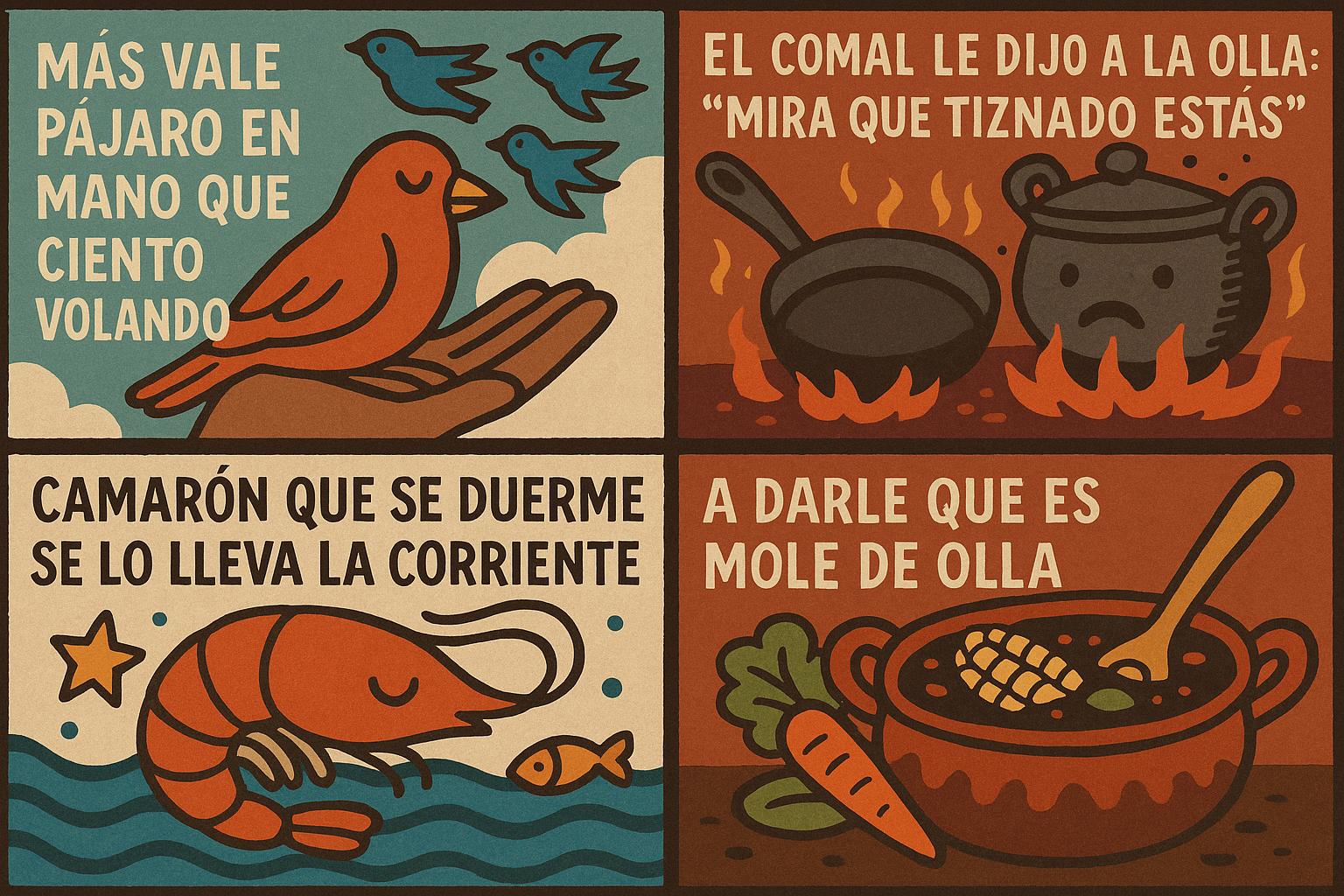
The unique historical and environmental context of Mexico significantly influences the creation and adoption of its proverbs. The proverb “Camarón que se duerme, se lo lleva la corriente.” translates to “The shrimp that falls asleep is carried away by the current.” This expression underscores the importance of vigilance and attentiveness, perhaps shaped by the country’s agricultural and coastal way of life.
This saying likely emerged from the geographical and occupational realities faced by Mexican communities. With many livelihoods historically dependent on farming and fishing, the need for alertness in these demanding environments is paramount. Thus, proverbs often serve as mnemonic tools, reminding individuals of the critical necessity for awareness and diligence.
The Role of Humor
Humor is woven into many Mexican proverbs, serving to address serious topics in an accessible way. Sayings like “El que es perico, donde quiera es verde.” which means “He who is a parrot is green wherever he goes,” use light-hearted imagery to convey messages about identity and authenticity. This proverb suggests that a person’s true nature will manifest regardless of circumstances or surroundings.
By integrating humor, these proverbs offer an indirect way to critique societal norms or personal behavior. They provide a playful yet impactful method for reflecting on human nature, encouraging introspection through amusement and laughter.
Continued Relevance
Despite the evolution of global communication and technological advances, these proverbs remain crucial in contemporary Mexican society. They continue to function as pedagogical tools used in familial and social settings to impart lessons and retain cultural heritage.
In a rapidly globalizing world, proverbs help Mexicans maintain a connection to their roots, fostering a sense of cultural identity and community. The continued use of these sayings ensures that traditional wisdom complements modern living, offering tried-and-true advice applicable to contemporary challenges.
Conclusion
Mexican proverbs and sayings are far more than mere linguistic formulations. They provide profound insights into societal values and historical influences, painting a vivid picture of Mexican cultural identity. By understanding these proverbs, one gains a deeper appreciation for Mexico’s rich cultural tapestry and the wisdom embedded within its oral traditions.
These expressions offer an invaluable window into the collective experiences and philosophical outlooks that have shaped Mexican society. For those interested in cultural exploration, delving into the world of Mexican proverbs unveils a nuanced perspective of life in Mexico, highlighting the intersection of history, environment, and social values.