Christmas in Mexico
Christmas in Mexico is a vibrant and culturally rich celebration that intertwines Catholic traditions with indigenous customs. This festive season spans from early December until January 6th, culminating with Dia de los Reyes or King’s Day. The Mexican Christmas experience is a colorful mixture of religious observances, family gatherings, and community festivities that make it unique.
The Season Begins
The holiday season in Mexico officially begins with the Feast of the Virgin of Guadalupe celebrated on December 12th. This day honors the Virgin of Guadalupe, who is not only the patron saint of Mexico but also a significant figure in Latin American Catholicism. Nationwide, this celebration entails church masses, vibrant street processions, and lively traditional music and dances involving both the young and old.
The importance of the Virgin of Guadalupe in Mexican culture cannot be overstated; she symbolizes unity, hope, and faith. Her feast day is an opportunity for communities to gather in large numbers at churches adorned with her image, reflecting her enduring impact on Mexico’s spiritual life. Learn more about these events.
Las Posadas: The Journey of Mary and Joseph
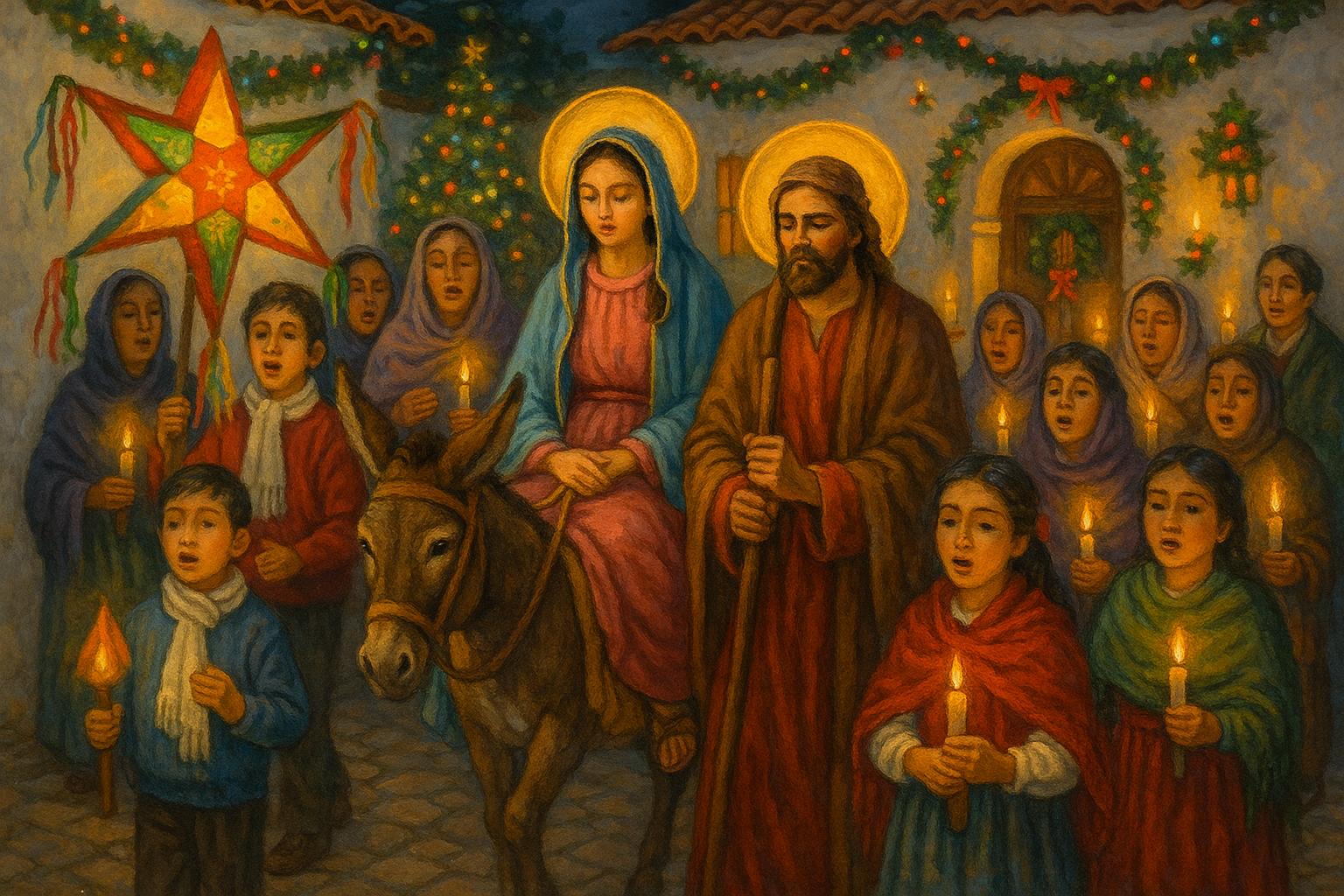
One of the cornerstone traditions of Christmas in Mexico is Las Posadas. This nine-day event, beginning on December 16th and culminating on December 24th, is a reenactment of Mary and Joseph’s search for shelter in Bethlehem.
Las Posadas is typically organized by communities, with participants often dressing as Mary and Joseph. These processions visit various houses in their neighborhood, singing traditional songs that request lodging. At each stop, the hosts, initially refusing, eventually welcome the procession indoors, signifying an invitation to the divine. At the end of the procession, participants enjoy refreshments like tamales, ponche, and sweets, representing the hospitality offered to Mary and Joseph.
The Significance of the Piñata
A notable tradition during Las Posadas is the breaking of a piñata. Traditionally, the piñata is shaped as a star with seven points, each representing one of the seven deadly sins. Participants, often blindfolded, take turns trying to break the piñata with a stick while others sing lively songs to encourage them.
The act of breaking the piñata symbolizes the triumph over sin and evil, a metaphor for spiritual purity. Once broken, the piñata showers the participants with candies and fruits, representing the rewards of faith and perseverance. This activity not only serves as entertainment but also conveys a deeper moral lesson.
Christmas Eve and Christmas Day
Christmas Eve, known as Nochebuena, is the focal point of the festive season. Families gather for a grand late-night feast, which usually includes traditional Mexican dishes such as tamales, bacalao (salted cod), and ponche, a warm punch made from fruits and spices. These meals are a culmination of days of preparation and embody the culinary diversity of Mexico.
In addition to the feast, Misa de Gallo, or Midnight Mass, is attended by many to celebrate the birth of Christ. This mass is often an elaborate affair, filled with songs, prayer, and reflection—central elements of a spiritual Christmas in Mexico.
Christmas Day itself is more subdued and is generally reserved for relaxation and family time. It is a day where extended family members often visit each other to continue the spirit of togetherness.
Extending Celebrations to January 6th
The holiday joy extends to January 6th with the celebration of Dia de los Reyes, commemorating the arrival of the Three Wise Men bearing gifts for the newborn Jesus. On this day, children eagerly anticipate receiving gifts, symbolizing the gifts brought by the Wise Men.
A highlight of Dia de los Reyes is the sharing of Rosca de Reyes, a special sweet bread shaped like a king’s crown. Embedded within the bread is a small figurine representing the baby Jesus. Whoever finds the figurine in their slice is tasked with organizing a celebration on Día de la Candelaria on February 2nd.
This culminating event, Día de la Candelaria, involves gatherings with tamales and atole, a traditional warm beverage made from cornmeal, which further extends the community bonding and festive spirit.
Understanding the Cultural Tapestry
The diverse customs and celebrations observed during Christmas in Mexico highlight the country’s cultural richness and its ability to blend different traditions into a unified celebration. Each activity, from Las Posadas to Dia de los Reyes, plays a crucial role in emphasizing family ties, community, and faith.
Exploring these traditions reveals a deep cultural tapestry that both residents and visitors can appreciate. For those interested, visiting Mexico during this season offers an immersive experience in enjoying local festivals and partaking in diverse cultural practices. Engaging with locals and participating in these events offers unique insights into the Mexican way of celebrating one of the most cherished times of the year.