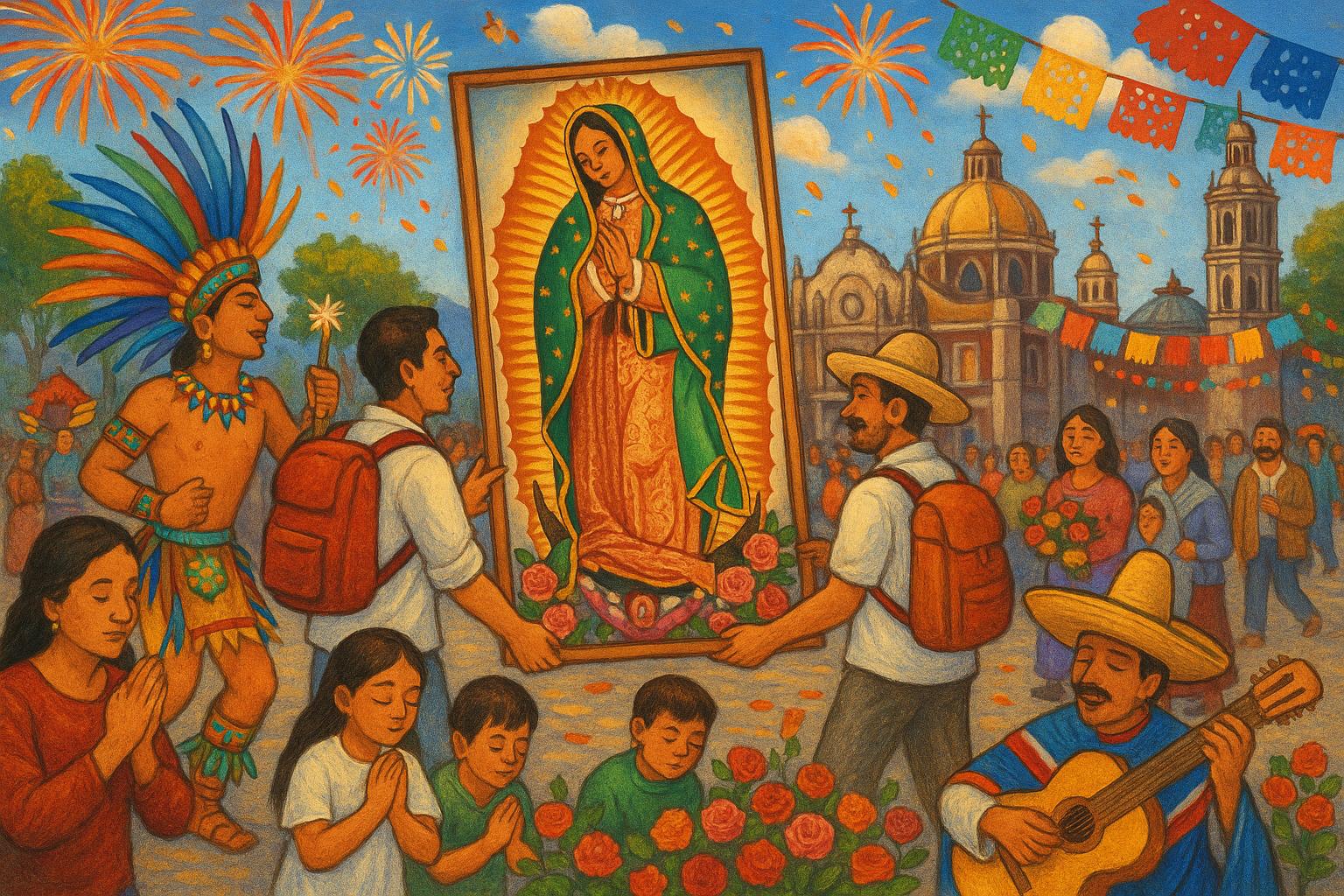
The Day of the Virgin of Guadalupe
The Day of the Virgin of Guadalupe, celebrated with great reverence and enthusiasm annually on December 12th, stands as a significant observance, both religiously and culturally, in Mexico and across the broader Latin American region. This event celebrates an apparition of the Virgin Mary to an indigenous person named Juan Diego back in the year 1531. Over the centuries, this has become a day deeply ingrained in cultural identity, representing a fusion of indigenous and European influences that have shaped Mexican heritage.
The Historical Account
The story of the Virgin of Guadalupe is rooted in the historical context of the early 16th century, a period soon after the Spanish had established control over Mexico. The Spanish conquest had led to significant turmoil and changes in the cultural landscape. According to historical traditions, Juan Diego, a Native American who had recently converted to Christianity, encountered an extraordinary vision of a young woman on December 9, 1531. The woman identified herself as the Virgin Mary. The significance of this encounter was amplified by the Virgin Mary communicating in Nahuatl, Juan Diego’s native language. Her request was simple yet profound: the construction of a church on the hill of Tepeyac, the location of her apparition. This request was eventually fulfilled, resulting in what is now the Basilica of Our Lady of Guadalupe in Mexico City, a site visited by millions of pilgrims each year.
The Image and Its Significance
One of the most compelling aspects of the tale involves the miraculous image of the Virgin of Guadalupe. As the story goes, the Virgin instructed Juan Diego to collect roses at the site, despite the season being wrong for such blooms. He gathered them in his tilma, a traditional cloak made from agave fibers, and presented them to the bishop as proof of her apparition. As he unfolded his tilma, not only did the roses tumble forth, but an image of the Virgin was imprinted mysteriously on the fabric. This image has since become a central symbol of devotion. Housed in the Basilica, it is not only a religious icon but also represents a powerful cultural symbol that millions revere and venerate.
Cultural and Religious Impact
The apparition of the Virgin of Guadalupe had immediate and long-lasting effects on both the indigenous population and the Spanish colonizers. For the indigenous people, her appearance and the image itself symbolized a divine acknowledgment and affirmation of their place in a rapidly changing world. Her distinctly indigenous features and attire, as depicted in the miraculous image, provided a powerful symbol of cultural identity and resilience. For many, the Virgin of Guadalupe has come to symbolize the blending of cultures, being both a mother figure and a national symbol, embodying the spiritual synthesis of indigenous and European beliefs. Her presence was instrumental in fostering a sense of hope and unity among a population that had experienced considerable upheaval under colonialism.
Modern Celebrations
Today, the Day of the Virgin of Guadalupe is celebrated with fervor and includes a multitude of events and traditions. A central aspect of the celebrations involves pilgrimages to the Basilica, with millions making the journey every year. These pilgrimages are acts of devotion, with many participants walking for days or even weeks to reach the sacred site. The event is not only religious but also highly cultural, marked by masses, traditional music, vibrant dances, and elaborate reenactments of the Marian apparitions. In addition to these activities, the day is an opportunity for families and communities to gather, reflecting on their shared faith and cultural history. These festivities underscore the ongoing importance of the Virgin of Guadalupe as a symbol of identity and community cohesion.
For those interested in learning more about this rich tapestry of tradition and devotion, numerous scholarly articles and books provide in-depth analyses of the significance and historical context of the Virgin of Guadalupe. These resources offer valuable insights into the cultural and religious dynamics that continue to make the Day of the Virgin of Guadalupe a vital part of Latin American identity and spiritual life. Participants and observers alike are invited to explore these materials for a deeper understanding of the enduring relevance and power of this observance.